Netizens have their fingers on new language
 0
0 


Netizens have become the biggest grassroots group of language creators of popular new Chinese words, according to a report released by the State Language Commission on Thursday.
|
|
|
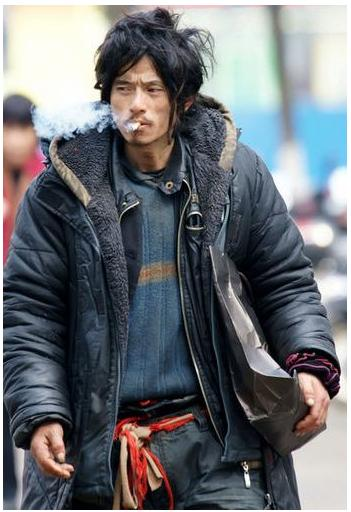
Brother Sharp |
"We live in the era of We-Media, which means everyone can create new words and make them popular through BBS or micro blogs," said Li Yuming, the director of the department of language information administration under the Ministry of Education and vice-president of the commission.
For example, you will be out of date if you do not know what yanggao ti, or lamb style, means, he said at the launch of the 2010 report Language Situation in China in Beijing on Thursday.
Used to describe something overly simplistic, the phrase was coined after the poet Che Yangao, who netizens have criticized for his colloquial style.
Fashion beggar, or xili ge (Brother Sharp), is also among the 500 popular new words in 2010, according to the report.
Brother Sharp was a homeless man who spent his days and nights wandering the streets of Ningbo, Zhejiang province. People began to notice him in March 2010, when a photo showed his "good looks and sharp sense of dressing", despite the fact that he got all his clothes from garbage cans.
He was nicknamed Brother Sharp by his fans and dubbed the "most handsome underdog of the century", Internet users enthused about "the glint in his eyes" and his "cool dude" attitude while begging for money from passers-by on the streets of Ningbo.
"These cyber words shock, amaze, and amuse us. This is an age of grassroots entertainment," said Dai Ran, a 28-year-old Beijinger.
The words might be a weird and haphazard combination of sounds for people who never surf the Internet, but to a country with 420 million netizens, they were meaningful, he said.
The report also said the "frequent use of popular cyber language" and "foreign language studies" have caused a decline in people's Chinese spelling ability.


