The Mausoleum of the First Emperor of the Qin Dynasty and Terracotta Warriors and Horses
 0
0 


The Mausoleum of the First Emperor of the Qin Dynasty (221 BC-206 BC), who successfully?defeated all rival ducal states and unified China by establishing the first centralized feudal dynasty, is located at the northern foot of Lishan Hill in Lintong, Shaanxi Province. It is the largest mausoleum ever discovered in the world.
The mausoleum covers a total of 2.18 million square meters, with the tomb itself covering 220,000 square meters. The tomb was designed to be 166 meters high, but years of weathering and damage have reduced this to 76 meters. The bottom of the tomb measures 485 meters by 515 meters.
The mausoleum originally consisted of inner and outer sections. The outer section had a circumference of 6,294 meters. In addition, an underground palace, 450 meters long from south to north and 390 meters wide from east to west and covering more than 180,000 square meters, has been discovered. According to Records of the Historian written over 2,000 years ago by Sima Qian, the construction of the grand project involved 700,000 laborers and took 36 years to be completed.
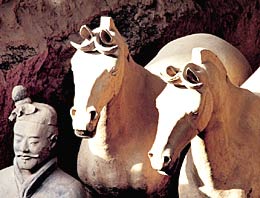 |
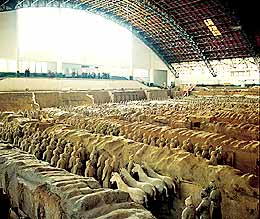
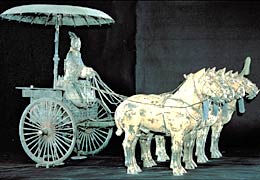
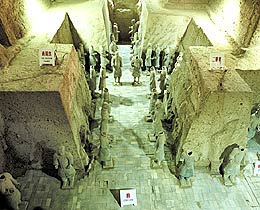
Pit One, first discovered in 1974, measures 230 meters long and 62 meters wide, covering over 14,000 square meters. It contains more than 6,000 terracotta warriors, which, with their individual features and facial expressions, line up in battle-readiness, creating an awe-inspiring effect. The pit?also buried a large number of chariots, weapons and other precious relics, of which some 10,000 metal weapons were unearthed. An unearthed bronze horse-driven chariot is the largest bronze ware ever found in the world.
The mausoleum along with the underground army entered the list of world cultural heritage sites in 1987.
 |
 |
 |
The Emperor Qin's Terra-cotta Museum
Tel: 86-29-3911961
(China.org.cn September 12, 2003)


