Beijing's forgotten tomb
 0
0 


While most Beijing residents and tourists are familiar with the Imperial Tombs of the Ming and Qing dynasties, many would be surprised to discover the tombs of a much older emperor are located on the outskirts of Beijing. In southern Beijing's Fengtai district, near the new Dabaotai station on the Fangshan metro line, the Dabaotai Western Han Tombs museum sits unassumingly on a tree-lined road, marked by a red pillar with the museum's name announced only in a traditional script.
|
|
|
Inside the Dabaotai Western Han Tombs museum. [Photo/Agencies] |

The museum is not crowded, or even very large, but it does boast of a well-preserved collection of relics. The tomb was built more than two thousand years ago on the site of the underground palace of Liu Jian (73 - 45 BC), who is the Guanyanqing Feudal Prince in the Western Han Dynasty. The underground tomb uses the "System of the Sons of the Heaven," which is the highest level funeral system used by the emperors of the Western Han Dynasty.
The tomb's construction consists of several hundred cubic meters of cypress and chinaberry logs, sealed with charcoal and gypsum. The structure lies 4.7 meters under the surface. Inside the museum, the inside of the tomb is revealed in a cross-section, allowing visitors to examine each layer of construction.
|
|
|
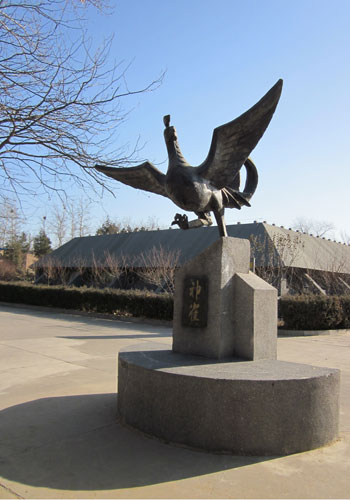
A statue stands in front of the concrete museum building. [Photo/CRIENGLISH.com] |
In front of the main tomb, visitors can peer into the site where three carriages and eleven horses were buried alive, creating a well-reserved specimen of carriages in the Western Han Dynasty. The details of the bones and outlines of the horses and even the spokes on the carriage wheels are easily discernable to the eye.
The tomb and its horse-drawn carriages are presented in such a raw format that museum-goers feel as if they are exploring an unfinished archaeological site; a welcome break from the polished and diluted nature of China's more famous museums. However, signs posted around the tomb's exhibit keep curious onlookers informed.
The museum features an exhibition room showcasing various relics from the tomb. Even though grave robbers looted the tomb long before it was discovered by archaeologists, the display is full of curiosities. The bones of sacrificial swans and other animals are on display, as well as silks and tapestries pulled from the grave. The usual addition of pottery and vases rounds out the collection.
The site is an excellent visit for Chinese history buffs, though the off-the-beaten-path location makes it difficult to access for casual tourists. Foreign visitors should bring their passports.

Go to Forum >>0 Comments