Reform economy to fight corruption
- By Zheng Yongnian
 0 Comment(s)
 Print
Print E-mail China.org.cn, April 23, 2012


To tackle corruption among officials, China must focus on economic, rather than political reforms.
 |
|
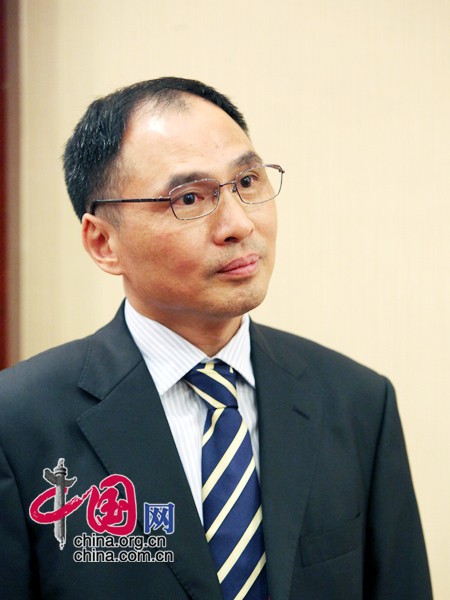
File photo of Zheng Yongnian, director of the East Asian Institute of the National University of Singapore |
To this end, it is crucial to ensure that government is kept separate from the economy, and to realize that a clean government also needs a transparent budget system.
With regards to separating government and politics from the economy and ensuring a transparent budget system, China is still at the initial stage. Since the beginning of China's reform and opening-up, one of the objectives of the reform has been to separate government functions from enterprise management. Even though the split between politics and the economy is a much wider concept than the separation of government functions from enterprise management, steps such as privatization and the protection of private property by the constitution have seen China make progress in this regard.
Reform and opening-up has seen China's private businesses develop rapidly and they now make a major contribution to the national economy. In order to protect private enterprises, China amended the constitution to legalize private property and also passed the Real Right Law.
However, the dominant role still played by politics has nullified such legal protection. Because of this, private enterprises must either cooperate with those in positions of political power and influence, or face an uncertain future, and it is this which leads to corruption.
The fact that SOEs are not truly enterprises in China has led to corruption and the abuse of state power within the SOEs. China never completed its reform program of the SOEs, and to date, SOE bosses retain their official titles. This means, in essence, that an SOE boss is a political figure rather than an entrepreneur. There is no obvious boundary between state political power and SOEs.


