Int'l meeting to address ivory and rhino horn trade
 0 Comment(s)
 Print
Print E-mail
China.org.cn, August 16, 2011
E-mail
China.org.cn, August 16, 2011


Countries are being urged to take steps to crack down on the trade in rhino horn and ivory, whichi is in an escalating crisis due to increased poaching and the growing illegal trade.
 |
|
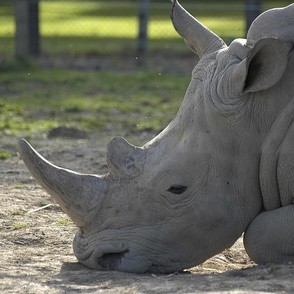
There has been a significant increase in the number of rhino killed in countries such as South Africa since 2010. |
The World Widelife Fund said in a report during the 61st meeting of the Convention on International Trade in Endangered Species (CITES) held in Gevena.
"We hope that this reinvigorated Committee – with new members and a new chair – will be prepared to take decisive action to ensure that governments follow through on the commitments they have made under the Convention," says Dr Colman O Criodain, WWF International's policy analyst on wildlife trade issues.
So far in 2011, South Africa has lost at least 250 rhinos to poaching, a rate that could exceed last year's record of 333 killings if not curbed.
Vietnam is the major destination for illegal horn, yet it appears to be doing little to address the problem, WWF said. This is despite recent allegations that many horn consumers are, in fact, government officials. In Vietnam, a new use for rhino horn as an alleged cancer treatment has emerged in recent years.
In a letter being presented to the Committee, Traditional Chinese Medicine (TCM) expert Lixin Huang emphasizes that rhino horn was purged from the Chinese pharmacopeia in 1993 and that it has no proven cancer treating properties.
"There is no evidence that rhino horn is an effective cure for cancer and this is not documented in TCM nor is it approved by the clinical research in traditional Chinese medicine," Huang writes.
A report on elephant poaching and illegal ivory trade being discussed at this week's meeting identifies China and Thailand as the two most important raw ivory consuming countries in the world.
WWF calls on China to improve its already strong enforcement efforts by strengthening its ivory management regime and by offering more support to the African countries where poaching and illegal trade are most prevalent.
Thailand is a major end destination for poached ivory that is intended for the tourist market. This week, the Committee should establish a deadline by which time Thailand must have finalized and implemented the necessary controls to curtail its domestic ivory markets. Thailand is the host country for the next meeting of the CITES Conference of the Parties.
The CITES Standing Committee is comprised of 19 countries, selected on a regional basis, and oversees the business of the Convention in between meetings of the Conference of the Parties.


