Canada limits toxic softeners in plastic baby toys
 0
0 


Canada will restrict six toxic chemicals used to soften vinyl plastics in order to limit the exposure of infants and children to the chemicals, Health Minister Leona Aglukkaq said Tuesday.
 |
|
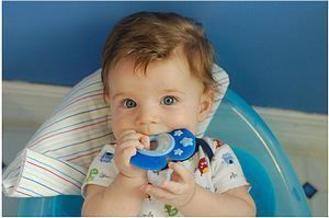
Chewing and sucking on soft plastic releases phthalates into saliva. |
The new regulations, to be implemented in June, will ban toys and child care products that contain greater than allowable concentrations of the six phthlates, a family of chemicals used to soften polyvinyl chloride, or PVC.
"Phthalates may adversely affect reproduction and development," Health Canada said in a fact sheet accompanying the government's decision.
"Today, we are acting to make the toys and products that young Canadians use even safer," said Aglukkaq. "New regulations will ensure products that are imported, sold or advertised in Canada do not present a risk of phthalate exposure to children and infants."
The mere presence of phthalates in soft vinyl toys does not equate to a health risk, Health Canada says, adding that touching or licking soft vinyl does not constitute a health risk.
But young children often put teething rings and soft vinyl toys into their mouths and chew on them, releasing the phthalates in the soft plastic into their saliva.
"It is the amount of phthalates that leach out of the soft vinyl and migrate into the body that can be harmful," Health Canada says. "Phthalates leach out of soft vinyl during periods of sustained mouthing action (sucking and chewing) that occurs on a daily basis, and migrate into the body through the saliva."
"I applaud the government's actions to limit the presence of this chemical in children's products," said Rick Smith, executive director of the nonprofit Environmental Defence Canada, which advocates for regulations to limit toxic chemicals.
"Canada's phthalates regulations are now aligned with measures taken in the United States and the European Union and will ensure our children receive the same high level of protection," said Smith.
In the European Union the concentrations of some phthalates has been restricted to 0.1 percent for use in children's toys since 1999. In the United States, a similar restriction was enacted as part of the Consumer Product Safety Improvement Act of 2008.
Canada's new regulations also use the 0.1 percent standard to limit six chemicals - di 2-ethylhexl phthalate (DEHP), dibutyl phthalate (DBP), benzyl butyl phthalate (BBP), diisononyl phthalate (DINP), diisodecyl phthalate (DIDP) and di-n-octyl phthalate (DNOP).


