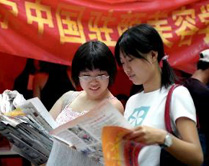
Universities and colleges are busy enrolling new students but for many non-public higher education institutions, this time of year has become a scramble for money.
Some of the 1,200 registered private colleges in China are trying every possible means to fill courses, lawful or not.
According to reports, there are many tricks being applied by college leaders. Some shorten the real names of the school, omitting words like "special" and "vocational" to make them sound more like regular public colleges. Others hide the truth that they cannot grant diplomas like regular public schools. Some vocational training schools falsify that they can give regular college programs. And others fabricate authorized quotas for enrollment.
Such unscrupulous tricks may well attract hopeful students and swell the enrollment list. But the masterminds of these ploys are operating on borrowed time. They will not succeed in the long run.
They are degrading the reputation of China's private education.
Private colleges and universities have mushroomed since early 1990s. Supplementary to the public education system, these private schools offer more educational opportunities and meet diversified demands.
But private schools normally fall behind public ones in aspects of investment and teaching staff. And in a country where State-funded higher institutions traditionally dominate, private schools have not received the equal support from government.
Only 197 private higher educational institutions are authorized by the Ministry of Education to issue diplomas with a record of education. And in many cases, such graduates of private schools do not receive the same treatment as those from public schools in residential permit quotas and employment. Private educators have long complained of such unfair treatments.
The situation has improved slightly in the past few years. The country's educational authorities now and again confirmed the necessity of developing private education to meet the growing demand. The Private Education Promotion Law went into effect last September. And a detailed regulation to implement the law kicked off on April 1, further ensuring the equality between non-State schools and those funded by the government.
The development of private schools, however, cannot merely depend on the improved policy environment.
Real efforts are needed to upgrade the quality of education and build up a better reputation in the private sector.
(China Daily August 7, 2004)
|