Serfs in the old Tibet before 1959 had no freedom, and the "free Tibet" described by the Dalai Lama was only enjoyed by serf owners who accounted 5 percent of its population, a signed commentary published on Friday's People's Daily said.
 |
|
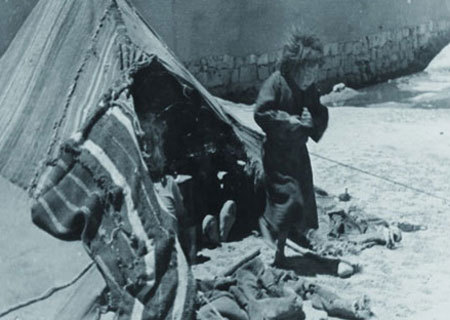
The picture shows a family of serfs living in a shabby tent. Miserable life of serfs . (File Photo) |
One of the contracts, made in 1914, showed a serf owner named Gykangba paid his debt to another serf owner Rampa by parting with possession of four of his serfs, a mother and her three daughters.
"Now being unable to pay back the principal and interest of the military provisions borrowed from noble Rampa, I, Gykangba, shall use Qoizin Drolma and her three daughters as payment of the debt," the contract read.
"The four persons shall be in possession of Rampa from this day. I am willing to be punished for any violations of this contract," it said.
Another contract showed the exchange of four female serfs and their offsprings in the Luduo Manor under the Drepung Monastery, one of Tibet's "great three" Gelukpa university monasteries on the suburbs of Lhasa, with three male serfs and their offsprings in the Sengong Manor of the same monastery.
It read, "As decided through consultations between agents from the Sengong Manor and the Ludo Manor, Dorje Wangmo, Drolma Lhazom,Butri, and Lhazom, four female attendants of Sengong Ladrang in Ludo Manor and their offsprings, shall be exchanged with male attendants Baico, Losang and Dorje residing in Sengong Manor and their offsprings."
All five original contracts are now documented in the State Archives Administration.
In his commentary, Wang Xiaobin said the contracts were proof that serfs in the old Tibet, who made up 95 percent of total population, enjoyed no freedom at all.
"Serfs were sold and bought like commodities in the old Tibet, and were forced into labor by the serf owners. They fell prey to the loan sharks, and were taken advantage of because they could not read nor count," said the commentary.
The Dalai Lama and his supporters in the West have described the old Tibet as a "romantic Shangri-La" where "...all the people were entitled to freedom," it said.
"But in reality, should there be a 'free Tibet', it was only enjoyed by the serf owners who resorted to the armed riot in 1959 in order to maintain their 'freedom' forever," the commentary said.
"This year marks the 50th anniversary of the emancipation of millions of serfs and slaves in Tibet... The Dalai Lama and his supporters' claims of a 'free Tibet' before 1959 will not fool anyone," it said.
The commentary, published under the byline Wang Xiaobin, said five contracts on exchanges or sales of serfs by their owners before the democratic reform of Tibet were proof of the lack of freedom in the old serfdom-reigned Tibet.
(Xinhua News Agency March 23, 2009)