Fiscal revenue should be tied to reductions in GDP growth targets
- By Tan Haojun
 0 Comment(s)
 Print
Print E-mail China.org.cn, February 6, 2015


 |
|
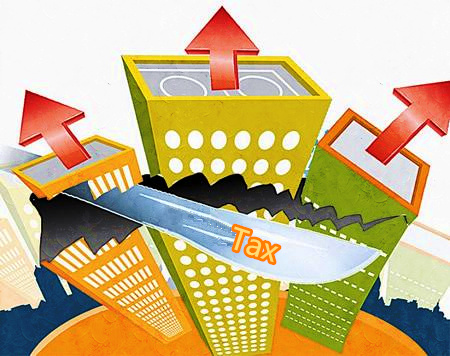
26 provinces in China had lowered their 2015 GDP growth targets as of January 28. |
According to press reports, 26 provinces in China had lowered their 2015 GDP growth targets as of January 28.
In a situation where the economy is facing the pressures of both decline and transition and real estate development- a pillar industry - is having trouble maintaining momentum, it is inevitable and necessary that GDP growth targets be reduced.
The current problem is that despite reaching consensus about lowering the target GDP growth rate as part of the new normal of the economic transition at local levels, it is still far from enough to lower only the target GDP growth rate to address the current state of economic and social development. It is more important and urgent to address fiscal revenue targets, especially the tax growth target.
It is a well-known fact that since the tax distribution system was established in 1994, fiscal revenue has maintained a double-digit growth rate for more than 20 successive years. Even though the taxation increase rate dropped to less than 10 percent in 2009 and 2013, it did not impact the double-digit growth rate in fiscal revenue because revenues from other fields made up for the shortage in income from taxation. Because of this, the ratio of fiscal revenue to GDP has been increasing continuously. Additionally, there are different kinds of revenues not covered in the state budget and irregular incomes, so the burden on taxpayers will be even higher.
In 2014, due largely to conditions in the macroeconomic environment, the growth rate of fiscal revenue may have dropped to less than 10 percent. However, according to data collected, the tax revenue from tax bureaus throughout the country in 2014 was 10.37 trillion yuan, an increase of 8.8 percent over the same period of the previous year, a rate which is in turn 1.4 percentage points higher than the GDP growth over the same period. In a situation where enterprise profitability is not good in general, the fact that the growth rate of tax revenue is more than 1 percentage points higher than GDP growth is troubling: Has there been over taxation or deficit spending? When demand and capability are incompatible, do local governments set their fiscal revenue targets - especially tax revenue growth targets - aimlessly, thus producing a negative effect on the relationship between finance and the economy?


