Great Firewall father speaks out
 0
0 


 |
|
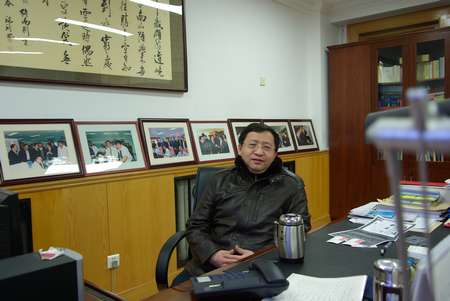
Fang Binxing [File photo] |
The father of the Great Firewall of China (GFW) has signed up to six virtual private networks (VPNs) that he uses to access some of the websites he had originally helped block.
"I have six VPNs on my home computer," says Fang Binxing, 50, president of the Beijing University of Posts and Telecommunications. "But I only try them to test which side wins: the GFW or the VPN.
"I'm not interested in reading messy information like some of that anti-government stuff."
There's a popular joke circulating the Chinese mainland about Mark Zuckerberg's surprise visit to Beijing around Christmas last year: The frustrated Facebook president is said to have pleaded with local Chinese entrepreneurs to show him how to beat the Great Firewall.
"Ever since I landed here in China I can't log onto my Facebook account!" he tells them.
The joke might not be real, but the Great Firewall of China is very much alive, blocking the world's most popular websites including YouTube, Facebook, Twitter and WikiLeaks.
Fang's handiwork brought down on him an intense barrage of online criticism in December when he opened a microblog on Sina.com.
Within three hours, nearly 10,000 Web users left messages for the father of the Great Firewall. Few were complimentary.
Sacrifice for the country
As a self-described "scholar," Fang says he was only doing the right thing, and anyway, sticks and stones.
He confirms he was head designer for key parts of the Great Firewall reportedly launched in 1998 that came online about 2003.
Fang shut down his microblog account after a few days and has kept mum about the incident until now.
"I regard the dirty abuse as a sacrifice for my country," Fang says. "They can't get what they want so they need to blame someone emotionally: like if you fail to get a US visa and you slag off the US visa official afterwards."
This massive accumulation of sarcastic and ugly abuse of Fang all stemmed from his role in creating a technology that filters controversial keywords and blocks access to websites deemed sensitive.
Fang refuses to reveal how the Great Firewall works. Crossing hands over chest, he says, "It's confidential."
As to the future of his creation, that's not up to him, Fang says.
"My design was chosen in the end because my project was the most excellent," he says with a big, tight smile, then pauses. "The country urgently needed such a system at that time."
The year 1998 was a turning point for the development of the Internet in China, says Zhang Zhi'an, associate professor of the journalism school at Fudan University in Shanghai.
It was when portals Sina. com and Sohu.com first appeared and the number of Chinese mainland Web users hit 1 million. It was also when the government began paying serious attention to the Internet, he says.
"Building the Great Firewall was a natural reaction to something newborn and unknown," Zhang says.


