Hydro-power dam in Tibet stirs debate
 0
0 


Hydropower engineers and economists Wednesday defended plans to dam a major river in the Tibet Autonomous Region, saying the multi-billion-yuan project would not dramatically impact downstream areas, given its minimum effect on the water supply.
|
|
The statement came amid concerns from environmentalists that the project could disrupt water flows downstream in India.
The damming of the Yarlung Zangbo River, also known as the Brahmaputra in India, commenced Friday. This marks the start of construction on the main part of the Zangmu Hydropower Station, the first mega hydroelectric power plant in Tibet.
"The riverflow will not be stopped during construction," Li Chaoyi, chief engineer of China Huaneng Group, the prime contractor for the project, told the Xinhua News Agency Wednesday. "After it becomes operational, the water will flow downstream through water turbines and sluices, thereby not affecting the downstream water levels."
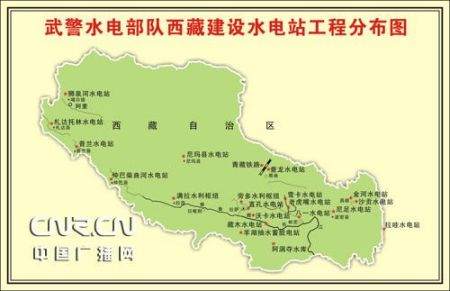
With a total investment of nearly 7.9 billion yuan ($1.2 billion), the hydropower station will be built along the middle reaches of the Yarlung Zangbo River, the highest in the world. It is located in Gyaca county, Lhokha prefecture of Tibet, 325 kilometers southeast of Lhasa. The station, with six 85-megawatt power-generating units, is designed to answer energy shortages in central Tiber, with the first generators expected to come online in 2014.
The Yarlung Zangbo River originates upstream among the northern foothills of the Himalayas and flows from west to east across southern Tibet, where it has long been considered a sacred river. It then passes through India, where it is known as the Brahmaputra River. On Tuesday, Indian Foreign Secretary Nirupama Rao raised her concerns with Chinese Vice Foreign Minister Zhang Zhijun over the possible downstream impact of the project during the fourth round of bilateral strategic dialogue held in Wuhan, central Hubei Province, according to The Hindu newspaper.
Zhang assured Rao that the project "was not a project designed to divert water" and would not affect "the welfare and availability of water of the population in the lower reaches of the Brahmaputra," the paper added. China has also expressed its willingness to continue exchanging data with India to minimize the risks of any dispute arising, it said. Environmentalists warn that building a large dam in an area with such complicated geological structures could threaten the region's fragile ecosystem.
"The diversified fauna and flora there have evolved over tens of millions of years and will be damaged. Blocking the river may also overturn the balance of the region's ecosystem," Wang Yongchen, founder of Beijing-based Green Earth Volunteers, told the Global Times, adding "it seems to be unworthy to build a dam while sacrificing the environment."


