Europe likely to send hot money to China
 0 Comment(s)
 Print
Print E-mail China Daily, March 2, 2015


|
|
|
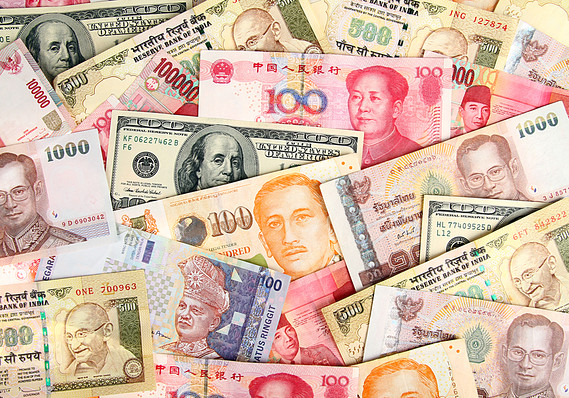
Photo shows China's yuan and other currencies. [File photo] |
Dramatic monetary policies in Europe have lots of potential to create a new surge of hot money inflow into China, says Simon Derrick, chief currency strategist at the Bank of New York Mellon.
Hot money is speculative money that flows quickly between markets as investors cast about for high interest rates and returns. It can create distortions in sufficient quantity.
This impact is similar to that caused by quantitative easing by the US Federal Reserve on China in 2009, when excess money created was looking for a home in a high growth economy, Derrick says.
As China experiences this inflow of hot money, it is tempting to introduce exchange rate controls similar to a repeg of the renminbi to the US dollar, he says, but such measures are not advantageous for the longer term.
"The temptation is to step in and intervene, but the problem is that you'd simply end up with the same old reserve policies and reserve problem that characterized the currency war for the last 25 years," says Derrick.
Instead, the brave thing for China is to decide that it has committed to liberalizing the currency, so it should use monetary policy to control inflationary pressures, he says.
"I hope that will happen, as it shows that the People's Bank of China, and more generally the Chinese government, have had faith in what they were doing. I really do believe what's happened over the last 18 months is an important step and I'd like to see it continue to happen," says Derrick.
The two events in Europe that Derrick made reference to are the European Central Bank's intention to execute quantitative easing in March and the introduction of a negative interest rate by the Swiss National Bank.
According to European Central Bank announcements in January, at least 1.1 trillion euros will be injected into the ailing eurozone economy.
The measure was decided upon to address problems in the eurozone after it was revealed in December that the eurozone had fallen into deflation for the first time in more than five years.
Meanwhile, in January, the Swiss National Bank introduced a negative interest rate of-0.25 percent on commercial bank deposits in order to stem the rise of the Swiss franc against the euro.
Derrick says the QE in the eurozone is on a magnitude similar to that of the QE introduced by the US Federal Reserve in 2009, leading to the potential for a big flow of hot money into China on a similar scale.
The negative interest rate of the Swiss franc will encourage borrowing, and China then will become an obvious location for this extra money to be invested, he says.
Put into a historical perspective, such major monetary adjustments globally will create a real test for the Chinese government on how to keep its exchange rate under control.
Such overseas investment will help the Chinese economy grow, help Chinese companies internationalize and support the internationalization of the Chinese currency over the long term, he says.


