Instant noodle maker hikes prices
 0
0 


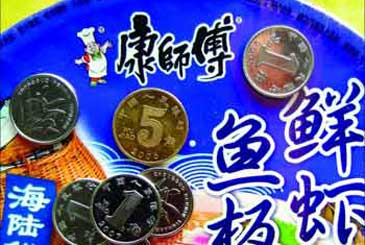
Tingyi Holdings Monday increased the price of each package of its popular Master Kong instant noodles by 10 percent.
Taiwan-based Tingyi (Cayman Islands) Holdings Corp said in a statement to the Hong Kong Stock Exchange that the retail price of each packet has been raised from 2 yuan ($0.30) to 2.20 yuan ($0.33) due to a recent surge in the price of raw materials used in the plastic-packaged meals.
"Prices for raw materials, including flour, palm oil, starch and flavors such as garlic have surged this year, ranging from 15 percent to 100 percent, which has greatly increased costs," the statement said.
The price of the company's noodles packaged in ready-to-eat bowls hasn't gone up, but consumers aren't getting as much as they used to. "Price pressure on this group of products has been partly digested by reducing the net weight of the product a bit," Li Yilin, a Tingyi Holdings spokeswoman said.
Major competitors of Master Kong are holding firm on their prices, at least for the time being. Lu Weimin, spokesman for President Enterprises (China) Investment, another major maker of instant noodles, told the Global Times yesterday that the company wasn't planning to increase its prices.
In light of Tingyi's price hike, though, industry analysts expressed concerns over the possible effect such a significant increase could have on the industry.
"There is a great chance that the surging raw material prices will trigger a price increase across the whole (instant noodle) industry," said Zhou Siran, an industry analyst with CIC Industry Research Center.
The price of flour has risen from 2,600 yuan ($389.13) to 2,800 yuan ($419.07) per ton this year, but the price of palm oil has soared. Palm oil makes up nearly 20 percent of the cost of instant noodles, Zhou said, adding that food prices will continue to grow. If true, the result would likely be a rise in the Consumer Price Index (CPI), leading to more inflationary pressure.
"China's CPI (likely) peaked in October - a little bit higher than in September or about the same," said economist Zhang Xiaojing at the Chinese Academy of Social Sciences.
He doesn't expect a major surge in food prices in the near future, pointing to a bountiful harvest this year. "So supply is not a problem."


