Berlin Film Festival explores cultural identity through food, film
 0
0 


|
|
|
Actresses Jin Na (L), Monica Mo (2nd L), Lisa Lu (3rd L) and director Wang Quan'an arrive for the screening of the movie "Tuan Yuan" (Apart Together) at the 60th Berlinale International Film Festival in Berlin February 11, 2010. |
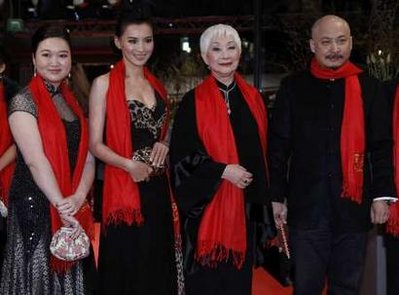
This year's roster of films includes Wang Quan'an's new film " Tuan Yuan" ("Apart Together"), which world premiered at the opening night festivities of the Berlinale and was shown again on Wednesday to a crowd of hungry festival goers.
"Eating is a very important factor in my film," explained director Wang Quan'an to Xinhua at the opening of the film's culinary event Wednesday night.
"In China, making food and preparing food together is a very social thing," said Wang.
The film, which is in the competition for this year's Golden Bear on Feb. 20, centers around a soldier, Liu Yansheng, who was separated from his love after going to Taiwan in 1949 and returns many years later to find his lover has married.
The former lovers, now elderly adults, are reunited and forced to work out their feelings for each other over extravagant family meals.
Last night at the Culinary Cinema, some 200 guests had the opportunity, after viewing the movie, to try a gourmet Chinese soup. In the film, Liu prepares "Buddha Jumps Over The Wall" for his former lover and her husband as a form of love and appreciation for their hospitality.
"In China, it's a mental and physical thing when you prepare food for someone," Wang said. "The more difficult the preparations and exquisite the ingredients, the more you express your respect and high value for them."
The soup, which normally contains around 30 ingredients, derives from the tale of a Buddhist monk, who although forbidden to eat meat is enticed by the aroma of a neighbor's soup and jumps over the wall to enjoy some.
After having seen the film, expectations mounted as audiences waited anxiously for their meal, which was prepared by one of Germany's most distinguished and Michelin star chefs, Tim Raue.
Thomas Struck, head of the increasingly popular Culinary Cinema, spoke to Xinhua about the decision to screen "Apart Together." "I was very happy when the film came to me. The meal explains the state of emotions of the characters. It's (the movie) so good. My personal favorite!"
On the subject matter of the similarities of film and food, Struck said: "Yes, the processes of making a film and preparing a dish are similar. It's teamwork and timing. And in the end both are consumed in a very short time!"
Tim Raue's "Buddha soup" arrived in a small porcelain white bowl. A mix of intense flavors, like ginger, suckling pig, scallops, and sea cucumber, the meal was undoubtedly a German influenced translation of the Chinese classic.
Like the film, which centers around dinner table arguments and family interaction, the food brought up various conversations about cultural identity and communication through eating.
Karin Richter, a Berliner and gourmand, told Xinhua: "The meal was wonderful. It was deliciously spicy."
However, when asked whether she believed Germans had a similar food culture of communication at the dinner table, Richter replied: "Germans eat or they speak, they don't do both."
Other guests were not, however, so convinced of the preparation of this Chinese gourmet dish.
Felix Mueller, another Berlin resident, said he was very fond of Chinese food and came to the event because he was a huge fan of the Michelin star chef, Tim Raue.
"The film was great and the experience offers insight into a world we don't know," Mueller said. "But honestly we were a little disappointed in the food. I don't think this is real Chinese food, it's not the kind of soup we expected."
Tickets for this year's "In the Food for Love" at the Culinary Cinema were sold out online within the first two hours.
It seems only appropriate that Wang's last line of the film says: "It doesn't matter how long you wait, you still have to eat. If you don't, it's over."


