 Share:

Chinese universities launched the Chinese University Alliance of Earth System Science (CUAESS) in Beijing on Dec. 8, a move intended to boost interdisciplinary collaboration on global environmental challenges.
The alliance brings together scholars and leading institutions across various fields, including Earth system science, ecology and the social sciences. Organizers said the group aims to pool resources to drive innovation, develop talent and apply research to support sustainable development worldwide.
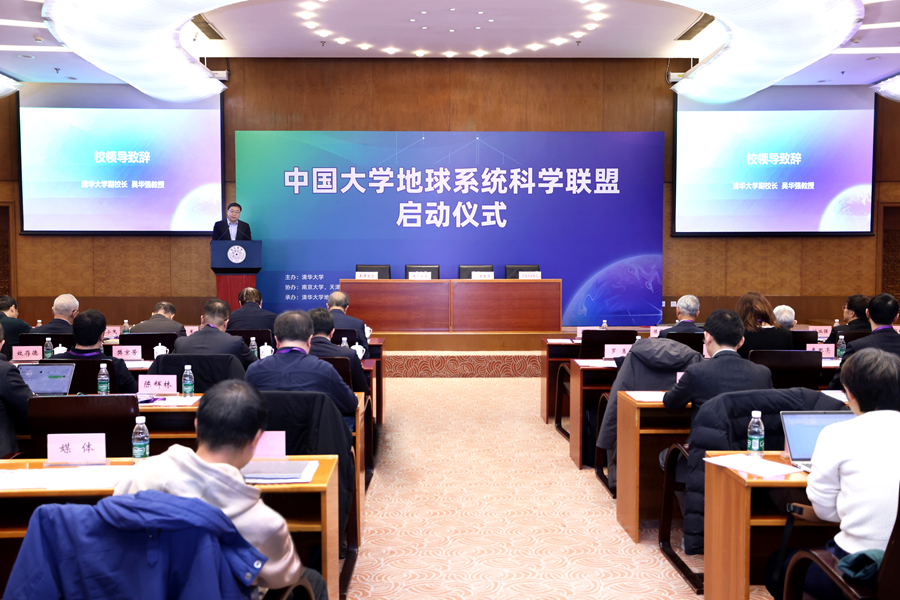
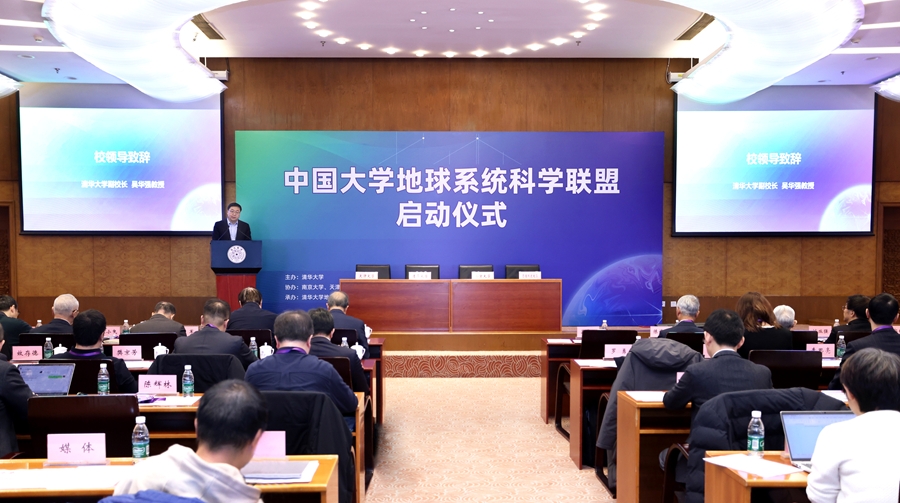
Wu Huaqiang, vice president of Tsinghua University, speaks during the launch ceremony of the Chinese University Alliance of Earth System Science at Tsinghua University in Beijing, Dec. 8, 2025. [Photo provided to China.org.cn]
At the launch ceremony, Wu Huaqiang, vice president of Tsinghua University, expressed his hope that the alliance would serve as a high-level and open platform dedicated to serving national strategies, cultivating talent, and driving technological innovation, thereby contributing China's strength to building a community with a shared future for humanity.
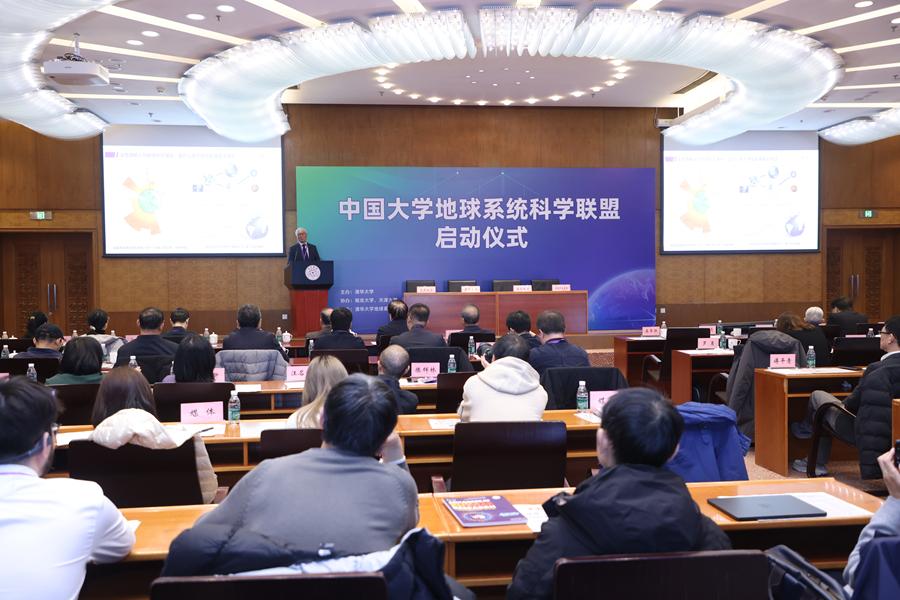
Chen Deliang, a foreign academician at the Chinese Academy of Sciences and Xinghua distinguished chair professor at Tsinghua University, describes the background, core missions and development framework of the Chinese University Alliance of Earth System Science at Tsinghua University in Beijing, Dec. 8, 2025. [Photo provided to China.org.cn]
Chen Deliang, a foreign academician at the Chinese Academy of Sciences and Xinghua distinguished chair professor at Tsinghua University, who serves as the alliance's founding chairman, said that traditional discipline-specific research is inadequate to address interconnected challenges such as climate change, ecological degradation, and emerging pollutants.
"The essence of Earth system science lies in incorporating human activities into the holistic framework of Earth's natural processes," Chen said. "This provides a new scientific basis for global governance and sustainable development."
Chen called for more universities, institutions and agencies to join the CUAESS and work together to build a high-level national think tank, cultivate interdisciplinary talent and promote Chinese solutions in global governance.
The establishment of the alliance has also drawn attention from international scholars.
Hans Joachim Schellnhuber, director of the International Institute for Applied Systems Analysis, emphasized during his speech that the launch marks a significant milestone not only for China but for the global Earth system science community. He noted that addressing climate change and environmental crises requires robust interdisciplinary collaboration.
"Chinese universities possess exceptional researchers and students working across vital disciplines such as atmospheric science, oceanography and the social sciences," he said. "Bringing them together under this framework is both timely and visionary."
He also expressed optimism for future international cooperation through the alliance, saying he looked forward to collaborating on joint research projects, shared data and modeling platforms, summer schools and global scientific assessments.
Wendy Broadgate, global hub director of Future Earth, emphasized the critical role of Earth system science in navigating the intensifying challenges of climate change, biodiversity loss and pressures on water and energy systems. She said understanding the interactions between climate, ecological systems and human societies is essential for achieving a sustainable and equitable future.
Broadgate noted that the CUAESS is expected to integrate expertise across diverse disciplines, positioning Chinese universities to accelerate scientific breakthroughs, drive innovation and cultivate the next generation of leaders in sustainability.
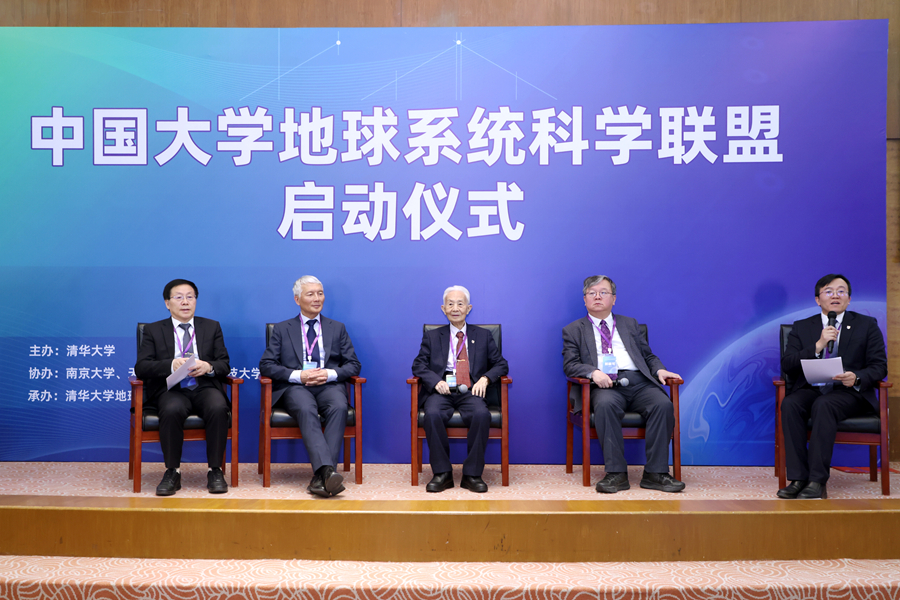
Participants engage in a roundtable discussion to share insights on Earth system science at Tsinghua University in Beijing, Dec. 8, 2025. [Photo provided to China.org.cn]
During the launch event, representatives from Tsinghua University, Nanjing University, Tianjin University and the Hong Kong University of Science and Technology — the founding members of the CUAESS — signed cooperation agreements.
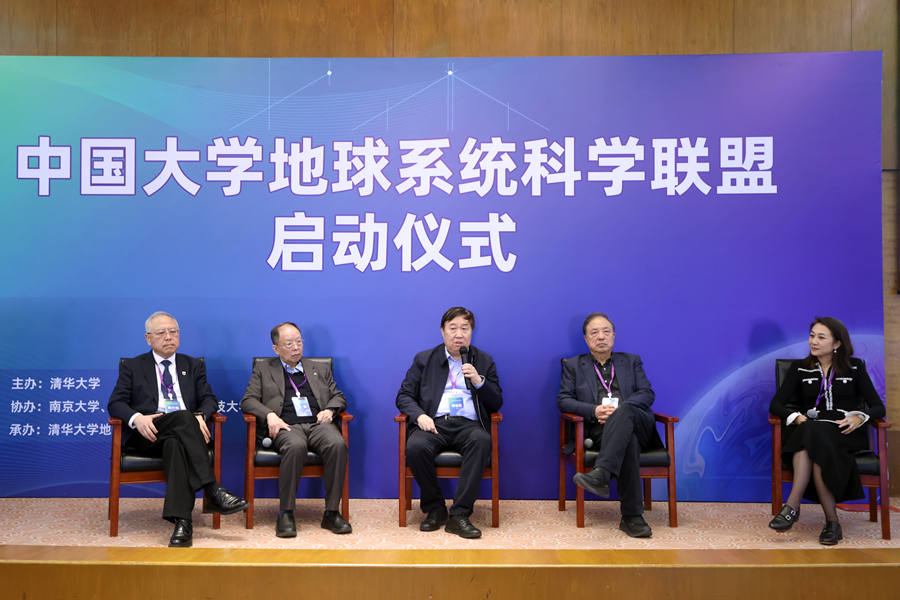
Participants engage in a roundtable discussion to share insights on Earth system science at Tsinghua University in Beijing, Dec. 8, 2025. [Photo provided to China.org.cn]
Participants also engaged in roundtable discussions, sharing insights on the opportunities and challenges in Earth system science and exploring the role of universities in advancing the field. Attendees also offered ideas for the alliance's future growth and direction.


 京公網安備 11010802027341號